
Mount of Corruption.
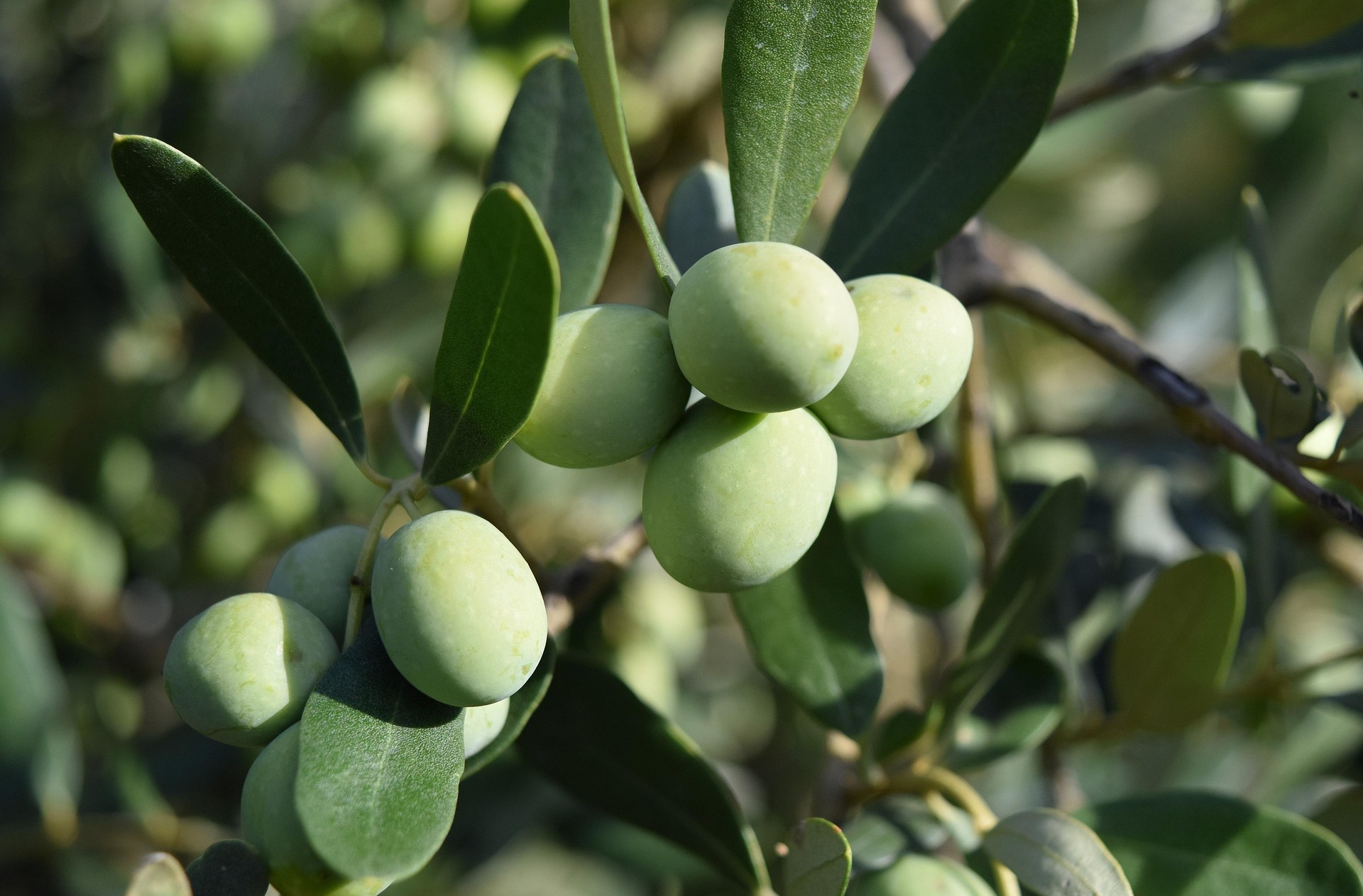
The Mount of Corruption, or as it is now more commonly known, the Mount of Olives, is the subject of this post by Thomas Amos.
Jesus and the Mount of Corruption
In 2 Kings 23:13, we find the following record:
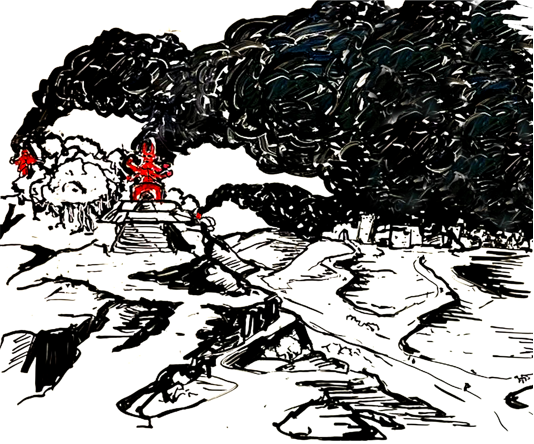
Then the king [Josiah] defiled the high places that were east of Jerusalem, on the south of the Mount of Corruption, which Solomon, king of Israel, had built for Ashtoreth, the abomination of the Sidonians, for Chemosh, the abomination of the Moabites, and for Milcom, the abomination of the people of Ammon.
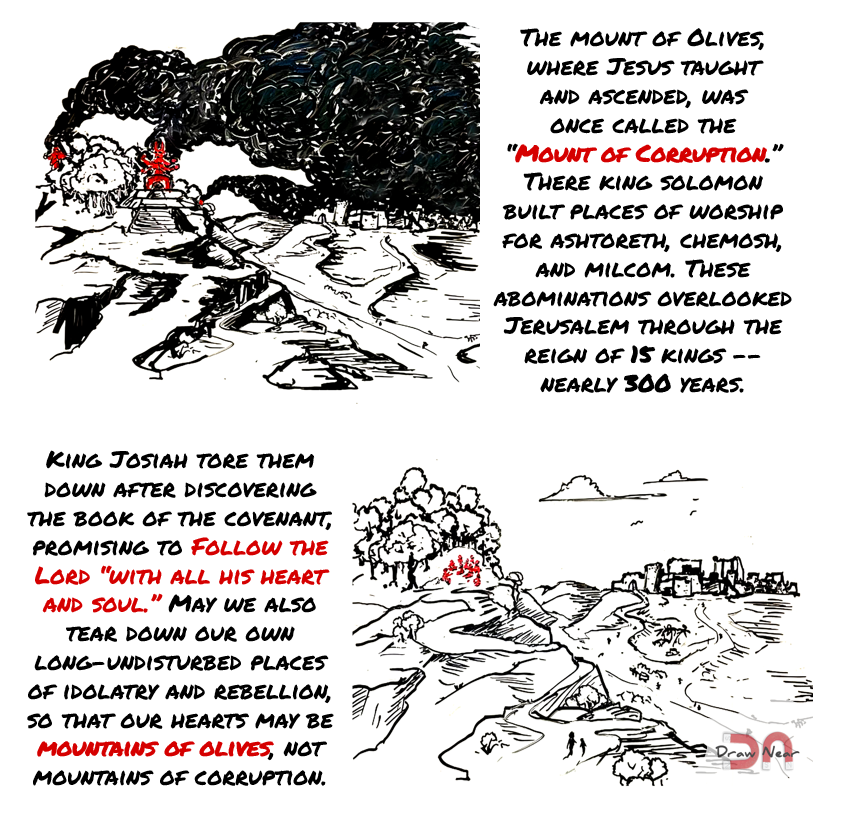
You may not recognize the name “Mount of Corruption,” but during the time of Christ’s ministry, the two-mile-long ridge overlooking Jerusalem was known by a more familiar name: the Mount of Olives.
This location, once dedicated to the blasphemous and often violent worship of pagan gods, was the site of the “Olivet Discourse,” where Jesus taught shortly before His crucifixion.
How did the mountain become such an evil place, and what transformed it into a place of olive trees and divine teaching?
King Solomon’s Idols
King Solomon is to blame for placing the idols there. He built the “high places” for his foreign wives. 1 Kings 11 recounts the failure of Solomon’s wisdom. In disobedience to God, he took hundreds of foreign wives, and “when Solomon was old, his wives turned his heart after other gods, and his heart was not loyal to the Lord his God.
Then Solomon built a high place for Chemosh, the abomination of Moab, on the hill east of Jerusalem, and for Molech, the abomination of the people of Ammon. And he did likewise for all his foreign wives, who burned incense and sacrificed to their gods.”
Destroyed by Josiah
The consequences were far-reaching. Not only did God divide the kingdom of Israel in two, the site of idolatry persisted, king after king, for generations.
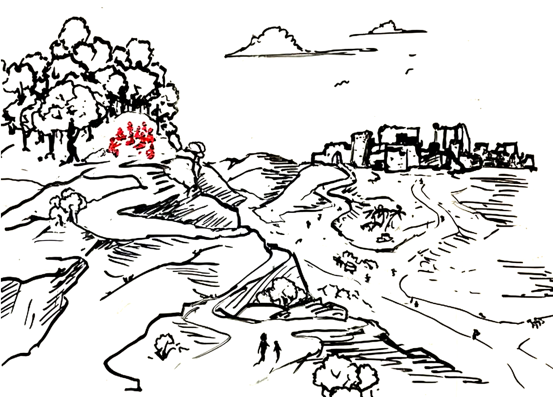
Temporarily destroyed by Hezekiah, the high places were quickly restored by his son, Manasseh, and then finally demolished and desecrated by Manasseh’s grandson, Josiah. They had endured through the reign of 14 kings, lasting nearly 300 years, a blight of corruption overlooking the city of peace and leading its people astray.
Why did Josiah tear them down? He discovered “the Book of the Law” and humbled himself before God in confession and repentance. 2 Kings tells us that after the discovery, he followed the Lord “with all his soul” and did not “turn to the right or left.”
Undisturbed Areas of Disobedience
Often, we allow areas of disobedience in our lives to persist undisturbed.
Sometimes it’s due to familiarity—“just my rough edges” or “it’s not really a problem.”
Other times, it’s open rebellion—a clinging of our hearts to some ungodly desire and a refusal to let go, even in the face of conviction and warning.
Whatever the reason, to have a right relationship with God, we must tear down the long-undisturbed places of idolatry so that our hearts can become a Mount of Olives, filled with good fruit and the presence of the Lord, rather than a Mount of Corruption, defiling not only ourselves, but those around us.

Do you share the aroma of Christ? How? We would love to hear from you. Comment below or contact us at HopeStreamRadio.
Thomas Amos

Thomas is a Navy veteran, public high school social studies teacher, and beekeeper. He married a lovely Canadian in 2009, whom he met through The Ezekiel Project School of Evangelism. Together, they live in rural South Georgia, where they raise and homeschool three children.
Since 2005, Thomas has been actively involved in Christian camp ministries, serving in various roles, including program director, speaker, or cabin leader. He is particularly fond of Camp Hope in Dahlonega, GA.
Locally, he is the leader of a regional chapter of F3 (Fitness, Fellowship, and Faith), a free men’s accountability and leadership workout group that meets three times a week. He also leads weekly workouts and devotionals at The Anchorage men’s live-in recovery center and speaks regularly in their chapel services.
Thomas attends a Baptist meeting on Sunday mornings and gathers with a small home assembly on Sunday afternoons. In his free time, he continues to grow as a devotional / doctrinal illustrator, combining scripture and art with the hope of encouraging others to draw near and hold fast to the Lord Jesus Christ.
You can view his work at www.DrawNear.today.
Leave a Reply